
Latest posts
-
Relative Value Arbitrage

Relative Value Arbitrage: A Sophisticated Approach to Capturing Market Inefficiencies Relative Value Arbitrage is one of the most sophisticated absolute-return strategies used by institutional investors and hedge funds. Unlike directional approaches that bet on the rise or fall of markets, this strategy focuses on identifying temporary pricing discrepancies between related financial instruments and profiting from…
-
Market structure with options Gex

Financial markets frequently appear chaotic and unpredictable, driven by news flows, sentiment shifts, and innumerable individual choices. Yet beneath this appearance exists a structured system of mechanical linkages that professional traders recognize and systematically exploit. These surface drivers mask deeper patterns rooted in market microstructure and derivatives positioning dynamics. Central to modern equity markets is…
-
Aggressive vs passive orders

Regarding the most effective ways to optimally implement one’s trading strategies in the context of modern and highly competitive financial markets, there are two primary methodologies for executing orders submitted to the market: the aggressive approach and the passive approach. Aggressive orders are transmitted directly to the market and are generally free of any restrictive…
-
Volatility and volume

One of the principal founders of exchange flow analysis, H.M. Gartley, formulated this question in the nineteen-thirties: “Does volume determine changes in quotations, or do price changes generate an increase or decrease in trading activity?” No elementary solution exists for this question. Recent academic research has advanced several hypotheses: The MDH model holds that information…
-
Volume never lies

Traders inevitably encounter phases of uncertainty when a technically flawless level such as a textbook support a clean trendline or a classic pattern is breached without any apparent catalyst and price advances directly against the anticipated direction. The recurring question remains what critical element was overlooked in the process In most situations the explanation resides…
-
FLEX Options: Financial Engineering and Customization in the Institutional Segment

FLEX Options: Financial Engineering and Customization in the Institutional Segment FLEX Options (FLexible EXchange® Options) represent high-complexity derivative solutions currently undergoing significant expansion within global capital markets, primarily across the institutional sector. Introduced by the CBOE in 1993, these instruments integrate the versatility inherent in over-the-counter (OTC) contracts with the risk mitigation, transparency, and liquidity…
-
Who will buy the products with AI era if jobs will disappear?

If artificial intelligence displaces the entire human workforce, which economic agents will sustain aggregate demand for goods and services? This objection appears systematically beneath every post I publish on AI—hundreds of variants each week, phrased in countless ways, yet invariably the same core question. And it is, without doubt, the sharpest issue in the entire…
-
Parallel Shift
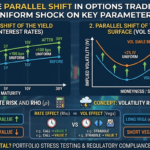
1. Definition and Curve Dynamics A Parallel Shift represents a rigid and uniform translation of the Yield Curve (or the Volatility Surface). Mathematically, for any given maturity $T$, the new parameter is defined as: $$r_{\text{new}}(T) = r_{\text{old}}(T) + \Delta$$ Where $\Delta$ is a constant expressed in basis points (bps). In this configuration, term spreads (slope)…
-
Menthor Q CTAs Funds Model
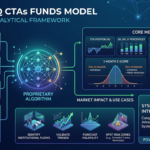
1. Methodological Premise: Q-CTA as a Quantitative Analytical Framework In the institutional trading landscape, a frequent terminological misconception identifies “Q-CTA positioning” as a specific asset class or fund type. In reality, there are no investment vehicles named Q-CTA. The acronym refers exclusively to the Menthor Q CTAs Funds Model, a proprietary quantitative algorithm developed by…
-
Black Swan or something else?

The information concerning the challenges faced by certain U.S. companies operating in the Private Credit segment confirms what I have long maintained regarding the ongoing crisis in the Shadow Banking System. The suspension of redemptions in Private Credit funds managed by Blue Owl Capital and BlackRock appears to echo the stress episodes that surfaced in…