
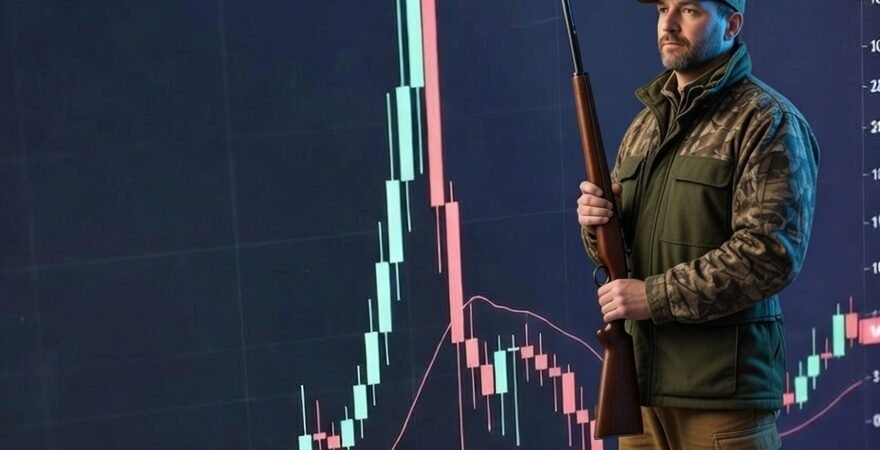
Cos’è lo stop hunting
Segnali tipici di stop hunting
Stop Hunting: A Professional Overview
Stop hunting is a widely discussed and controversial market practice, often attributed to market makers, large institutional participants, or non-transparent brokers. It consists of deliberately driving the price toward “sensitive” technical levels where a significant number of retail traders have positioned their stop-loss orders. The objective is to trigger these stops en masse, generate an abrupt surge in liquidity, and reverse the prevailing market direction to the advantage of the initiating parties.
How It Works in Practice
This tactic is typically executed at highly predictable zones: daily highs and lows, psychological round numbers (e.g., 1.1000 on EUR/USD), Fibonacci retracement levels, or pivot points. The mechanism is straightforward: a sharp, aggressive price spike — manifested as a long candlestick wick — reaches these levels, activates the clustered stop-loss orders of retail traders, liquidates their positions, and, once the forced liquidity has been absorbed, rapidly reverses in the opposite direction. Market-maker brokers particularly benefit from the significant widening of spreads during these volatility spikes. In contrast, pure ECN/STP brokers engage in this practice far less frequently, as they route orders directly to external liquidity providers.
Defensive Strategies for Traders
- Place stop-loss orders beyond the most obvious confluence zones (e.g., 10–20 pips beyond key support or resistance levels).
- Favor mental stops or dynamic trailing stops calculated using the Average True Range (ATR) rather than tight fixed stops.
- Avoid positioning stops at the most predictable price levels (round numbers, previous swing lows/highs, etc.).
- Continuously monitor volume and order flow: a price spike without accompanying real volume is almost always indicative of stop hunting.
Typical Characteristics of Stop Hunting
- Sudden and aggressive price spike
- Long wick measuring 10–30 pips followed by immediate reversal
- Small-bodied candles or doji formations
- Rapid return to the prior trading range within 1–4 hours
Distinguishing Stop Hunting from a Genuine Breakout
Genuine Breakout Strong candles with large, decisive bodies and minimal wicks, a clear close beyond the level, significantly rising volume, sustained continuation in the breakout direction, and a successful retest of the broken level as new support or resistance.
Stop Hunting / Fakeout Extremely long wicks or abrupt spikes, indecisive candles (doji or spinning tops), low or declining volume during the move, and a swift return into the prior range without follow-through.
Operational Guidelines
Never enter a position immediately upon a breakout occurring at an obvious technical level. Always wait for clear confirmation: a minimum of 2–3 H1 candles closing without reversal signals and in alignment with the dominant trend on higher timeframes (Daily or 4H). Only then should the trade be considered valid.
Conclusion
Stop hunting remains an inherent reality of modern financial markets. A thorough understanding of the phenomenon not only enables traders to protect themselves effectively but also allows them to transform it into a strategic opportunity — by positioning against the false move once it has been clearly identified and invalidated.